
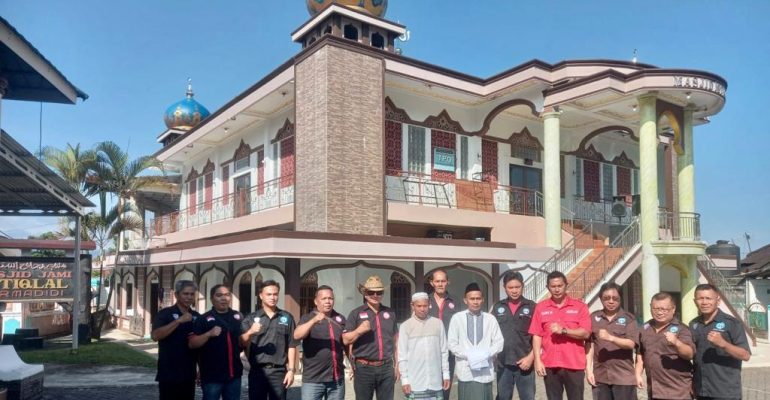
North Minahasa, a coastal and island regency of around 230,000 people in North Sulawesi, Indonesia, is home to diverse religious and ethnic communities. When a Muslim prayer room was vandalized in 2020, the incident became a turning point. The Regency’s response, the North Minahasa Peace Initiative, makes conflict prevention a permanent task of local government, with religious leaders as peace ambassadors.
Background
In 2020, a group of individuals vandalized a mushola, a small Muslim prayer room, in the village of Tumaluntung. Images of the damage spread rapidly on social media, fueling misinformation, anger and fear. Local communities, religious leaders and authorities condemned the attack as an isolated act that did not reflect the region’s values. Yet the incident exposed real weaknesses. There were gaps in the system to detect rising tensions early, communication between faith communities was limited, and the government could only respond after the damage was done.
Geography adds to the challenge. Many of North Minahasa’s communities live in rural villages and on small islands, where access to information and public services is limited and rumors can travel faster than facts. Minority groups in particular were left wondering whether something similar could happen again. A purely security-focused response risked deepening that mistrust. Instead of waiting for the next crisis, the regency decided to build a system that could prevent one.
The Project
The North Minahasa Peace Initiative was launched in 2022 and is coordinated by the regency’s Agency for National Unity and Politics (Kesbangpol). It brings several strands of work under one policy framework. Regular mediation forums are held with the Religious Harmony Forum (FKUB) and the Interfaith Cooperation Board (BKSAUA). Schools run tolerance education programs for young people. Cultural activities draw on mapalus, the Minahasan tradition of collective cooperation and mutual help.
At the heart of the initiative are around 650 religious leaders, trained and supported as peace ambassadors. They mediate disputes, guide their communities and flag tensions before they escalate. What makes the approach unusual is that the regency pays them a monthly incentive from its own budget, treating peace work as a public service rather than a voluntary favor. Between 2022 and mid-2024 the regency spent more than IDR 13.4 billion on these incentives. Over the same period it distributed IDR 10.8 billion in grants to 296 houses of worship, ensuring equal treatment across faith communities, making equal treatment across faith. Religious leaders play a consultative and facilitating role, while legal and policy decisions remain with the government. Kesbangpol monitors the work, and any mediation outcome that conflicts with national law or human rights is not adopted. Individuals who misuse their position can be removed from the forums.
The regency reports that since 2022 there have been no interreligious conflicts and no attacks on places of worship. Solidarity has also become visible. During Eid al-Fitr, Christian religious leaders and youth stood outside a mosque so that their Muslim neighbors could pray in peace. With peacebuilding now a regular line in its budget, North Minahasa shows how a local government can turn a moment of vulnerability into a lasting commitment to coexistence.